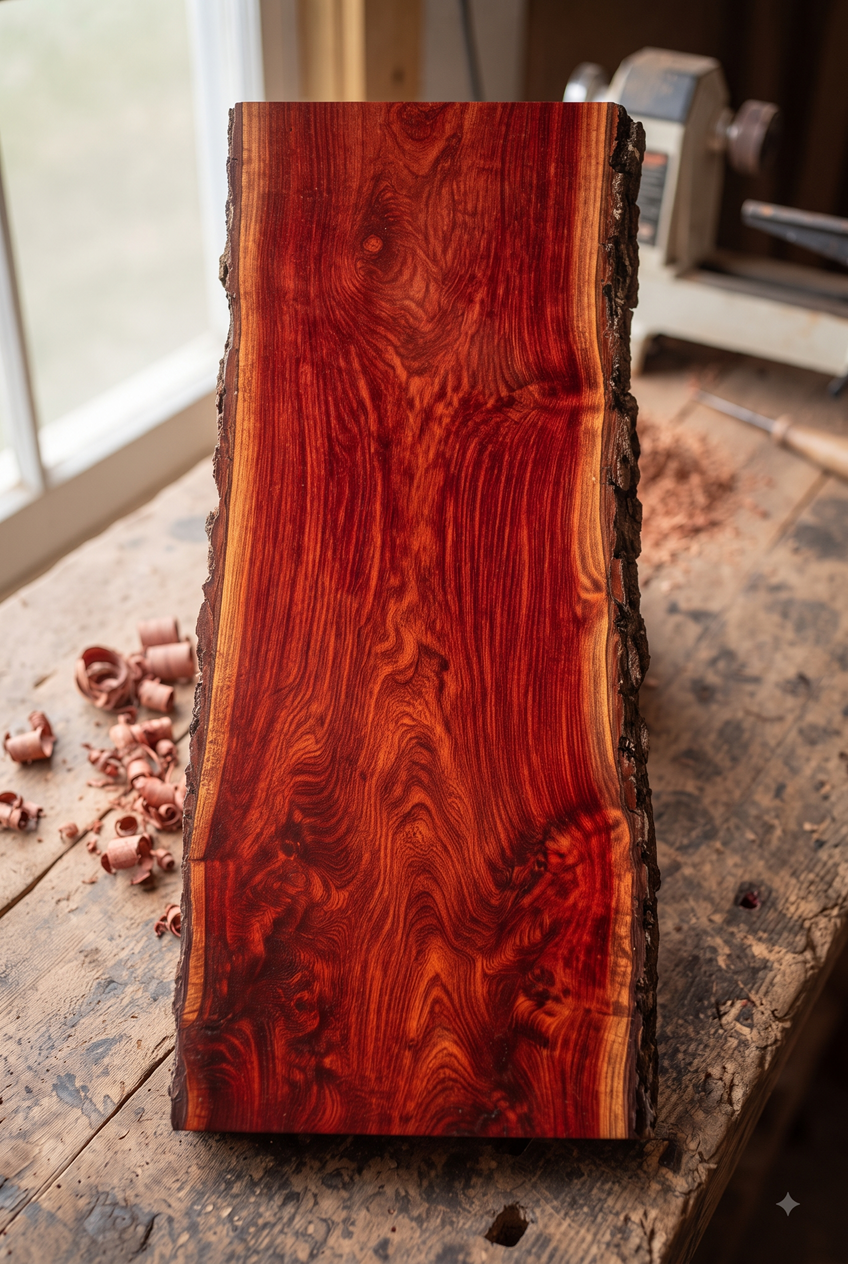
Chakte-kok (Red Heart)
Chakte-kok (Red Heart)
Origin: Southern Mexico, Guatemala, and the Yucatán Peninsula.
Color: Brilliant coral-red to deep rose-red when freshly cut, though prolonged exposure to light can darken it to a rich brownish-red patina.
Janka Hardness: 2,300 lbf (Very Hard).
Furniture Performance: Dense, fine-textured, and very stable. It machines smoothly and holds sharp details well, making it ideal for accent banding, intricate inlay, and small statement components.
Common Uses: Fine inlays, pool cues, turned decorative items, small furniture accents, and tool handles.
Fun Fact: The striking natural redness comes from intense chemical extractives locked within the heartwood, which give the lumber a vivid splash of color compared to typical native temperate trees.
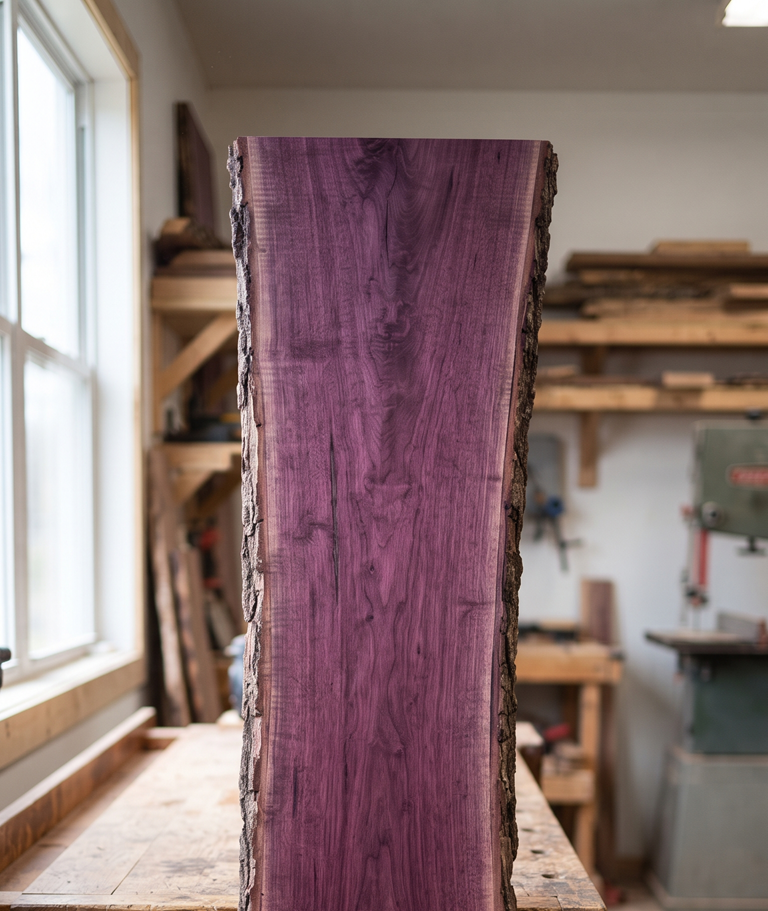
Purpleheart
Purpleheart
Origin: Central and South America (Suriname, Guyana, Brazil).
Color: Freshly cut heartwood is a dull grayish-brown, but exposure to UV light rapidly shifts it into a vibrant, vivid purple hue.
Janka Hardness: 1,860 lbf (Hard).
Furniture Performance: Exceptionally stiff, heavy, and strong. It acts as an incredible structural element for heavy-load furniture pieces, though its density requires sharp carbide tools to prevent scorching.
Common Uses: Heavy construction, flooring, decorative inlay, high-end furniture, and turnings.
Fun Fact: You can temporarily reverse the natural purple-to-brown fading caused by room lighting by gently applying heat from a heat gun to draw the rich purple color back to the surface.
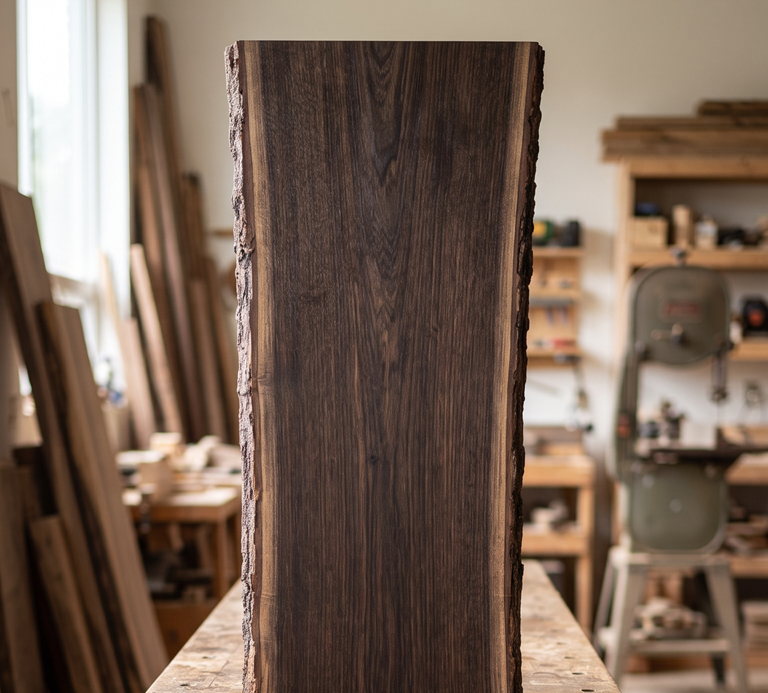
Wenge (Millettia laurentii)
Wenge (Millettia laurentii)
Origin: Central Africa (Democratic Republic of Congo, Cameroon, Gabon).
Color: Dark espresso brown with fine, closely spaced yellowish-white lines that create a textured appearance.
Janka Hardness: 1,930 lbf (Hard).
Furniture Performance: Exceptionally stiff and strong with minimal seasonal movement, making it robust for modern tables and chairs; however, its coarse pores are prone to deep splintering when handled raw.
Common Uses: Modern contemporary furniture, architectural flooring, billiard cues, and guitar bodies.
Fun Fact: Wenge is naturally stiff and acoustically resonant, making it a popular choice for reinforcing multi-laminated guitar necks.
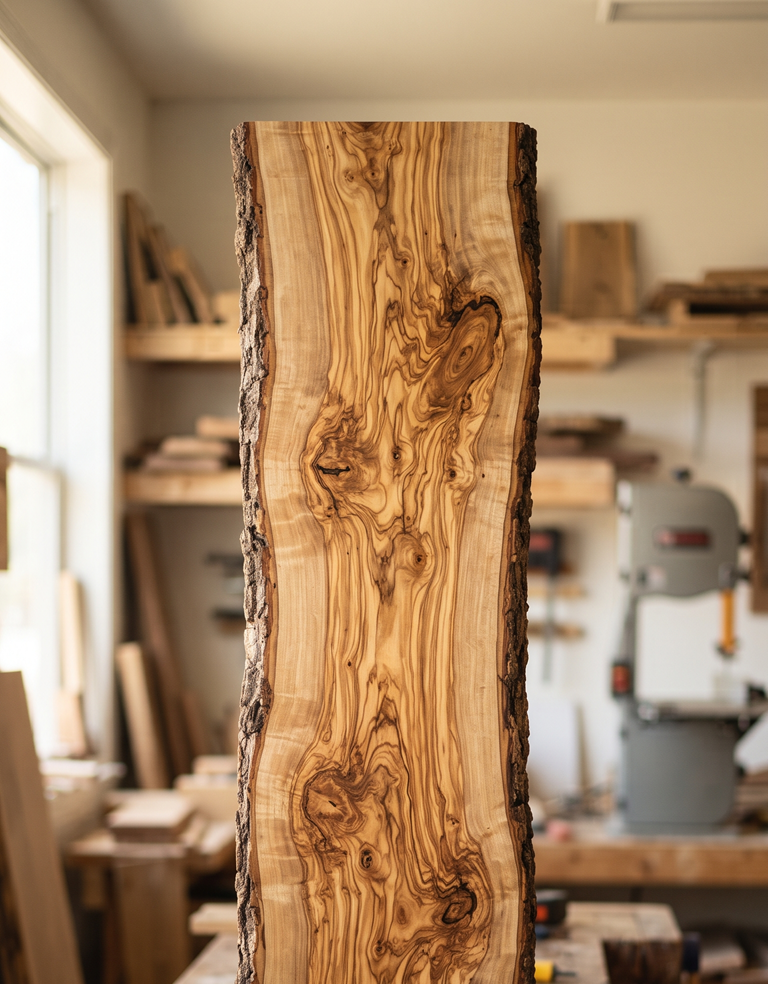
Olive Wood
Olivewood
Origin: Mediterranean basin (primarily Italy, Greece, and Spain).
Color: Creamy yellowish-brown background characterized by dramatic, swirling dark brown to black contrasting lines.
Janka Hardness: 2,700 lbf (Very Hard).
Furniture Performance: Dense, oily, and highly durable for small-scale surfaces. Because olive trees are typically small and twisted, it is best suited for accent panels, turned bowls, and small bespoke furniture inlays rather than massive tabletops.
Common Uses: Decorative veneers, small luxury furniture accents, kitchen utensils, and turnings.
Fun Fact: Olive trees grow very slowly and are deeply intertwined with Mediterranean history and mythology, often living for centuries which results in tightly packed, highly figured grain patterns.
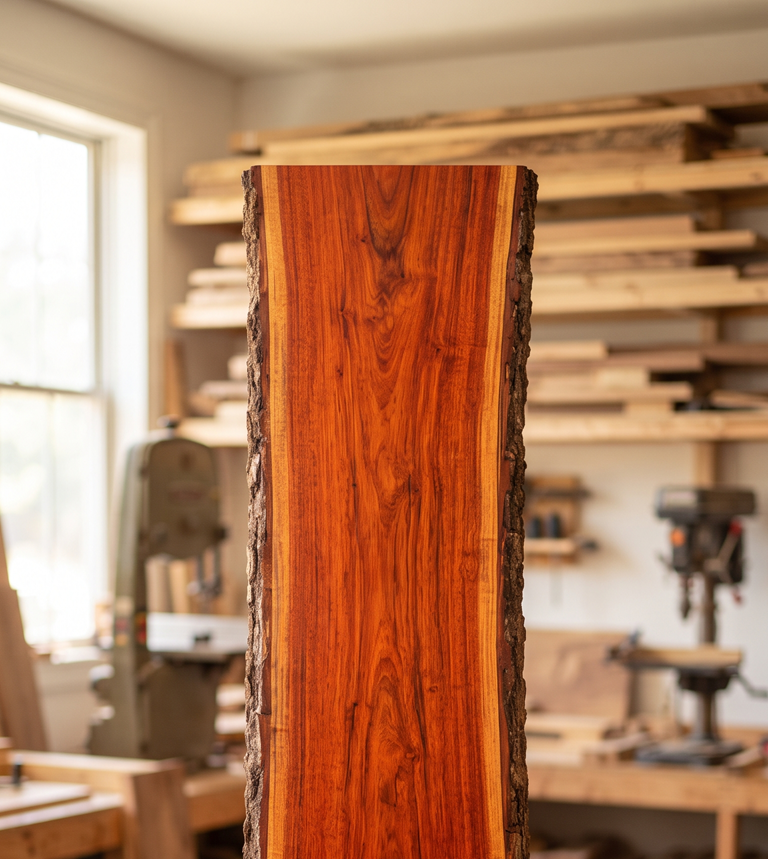
Padauk (African Padauk)
Padauk (African Padauk)
Origin: Central and West tropical Africa.
Color: Vivid, striking bright coral or vibrant red upon fresh cut, which gracefully oxidizes over time into a deep, rich brownish-purple or dark burgundy patina.
Janka Hardness: 1,970 lbf (Hard).
Furniture Performance: Outstanding dimensional stability with minimal seasonal movement. It is exceptionally pleasant to machine and glue, making it a reliable choice for accent strips and statement furniture pieces.
Common Uses: Fine furniture, cabinetry, decorative inlays, musical instruments, and turning projects.
Fun Fact: When freshly cut or sanded, Padauk dust emits a distinct, pleasant aromatic scent reminiscent of crushed vanilla or sweet spice.
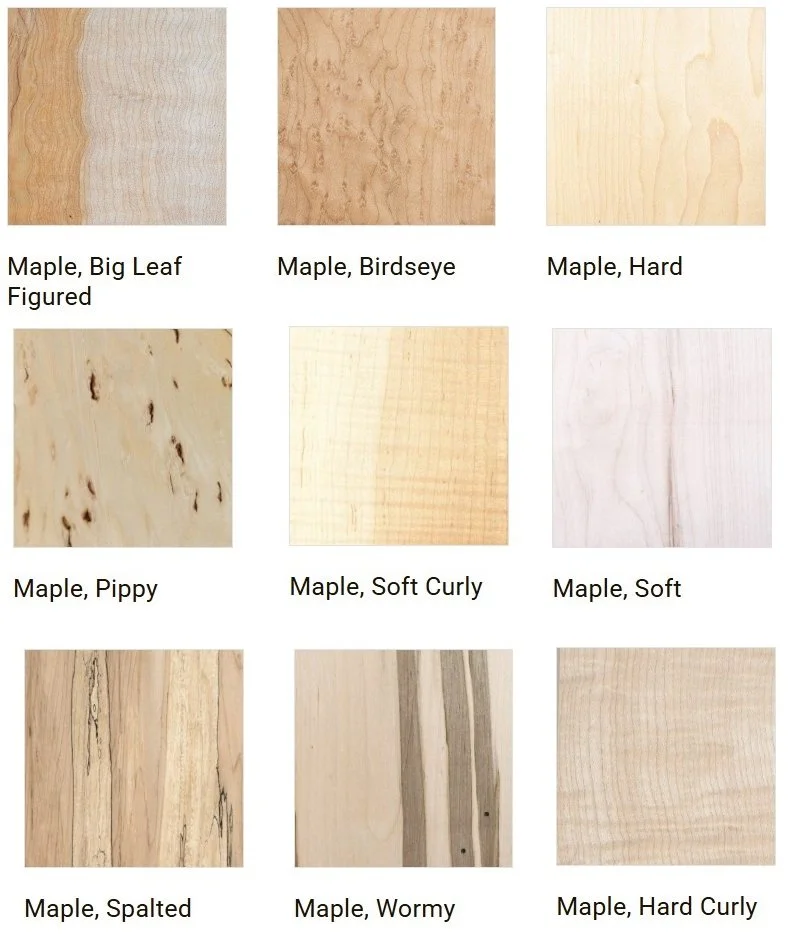
Maple : Big Leaf , Birdseye, Hard, Curly, Pippy, Soft, Spalted, Wormy
Maple Family : Big Leaf , Birdseye, Hard, Curly, Pippy, Soft, Spalted, Wormy
Origin: Geographically, the vast majority of commercial maples originate across North America. Eastern North America is the primary habitat for classical varieties such as Hard (Sugar) Maple, Soft Maple, and their distinct curly mutations, as well as Wormy and Spalted variants.
Hard Maple (Sugar Maple) and Hard Curly Maple represent the heavy-duty tier of the family, boasting a dense Janka rating of 1,450 lbf. They feature pale, creamy white to golden-tan tones, with the curly variant displaying a striking three-dimensional ribbed or corrugated grain.
Soft Maple and Soft Curly Maple offer a more forgiving structure with a Janka hardness of around 950 lbf, exhibiting greyish-white sapwood and pinkish-brown heartwood tones.
Big Leaf Figured Maple sits at a moderate hardness of approximately 850 lbf, showing light creamy white to reddish-brown hues with dramatic wave or fiddleback figures.
Specialty textured maples include Birdseye Maple, which shares the high 1,450 lbf hardness of sugar maple but is defined by tiny swirling circular eyes, and Pippy Maple, which showcases clustered dark dots and suppressed bud knots across a light cream background.
Naturally distressed or altered types include Spalted Maple, known for its dramatic black zoning lines caused by competing fungi, and Wormy (Ambrosia) Maple, which features grey-to-blue streaks and pinhole tracks left by beetles.
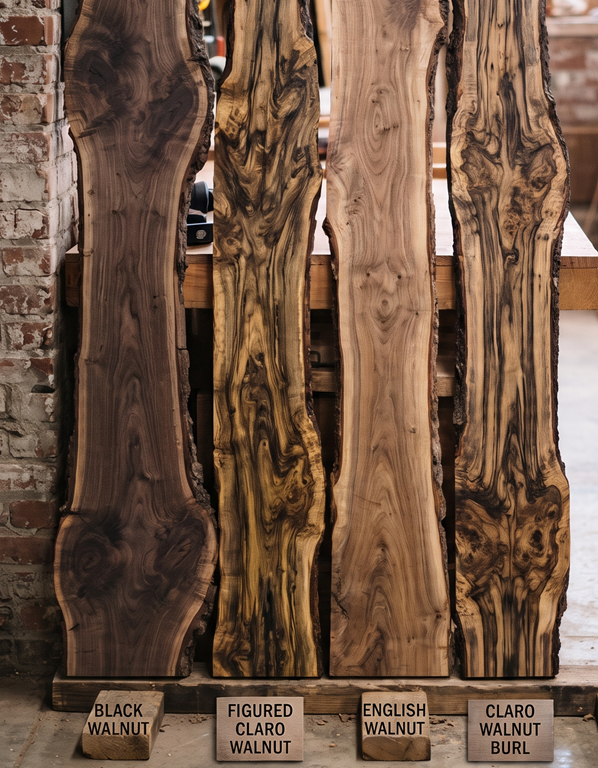
Walnut Family: American Black Walnut, Claro Walnut, English Walnut
Walnut Family: American Black Walnut, Claro Walnut, English Walnut
Origin: Geographically, walnuts thrive across diverse temperate regions of the Northern Hemisphere. Eastern and Central North America is the native habitat for classical American Black Walnut. Conversely, Claro Walnut is native specifically to the valleys of Northern California, while English (European) Walnut originates across Europe, Western Asia, and the Himalayan foothills.
Visually and structurally, the members of the walnut family vary across rich tones and densities:
English Walnut represents the denser tier of the family, boasting a Janka rating of 1,220 lbf. It features a warmer, golden-brown base frequently highlighted by high-contrast dark grain streaks known as "pencil stripping," lending itself brilliantly to fine hand carving and luxury details.
Claro Walnut sits at a moderate hardness of approximately 1,110 lbf, showing deep, dramatic color variations of chocolate, rich reds, and striking streaks of purple, gold, and near-black with wild, highly figured grain patterns.
American Black Walnut provides a slightly more forgiving structure with a Janka hardness of 1,010 lbf, exhibiting rich chocolate brown to purplish-dark heartwood contrasted by pale, creamy-white sapwood that dimensions and finishes exceptionally well.
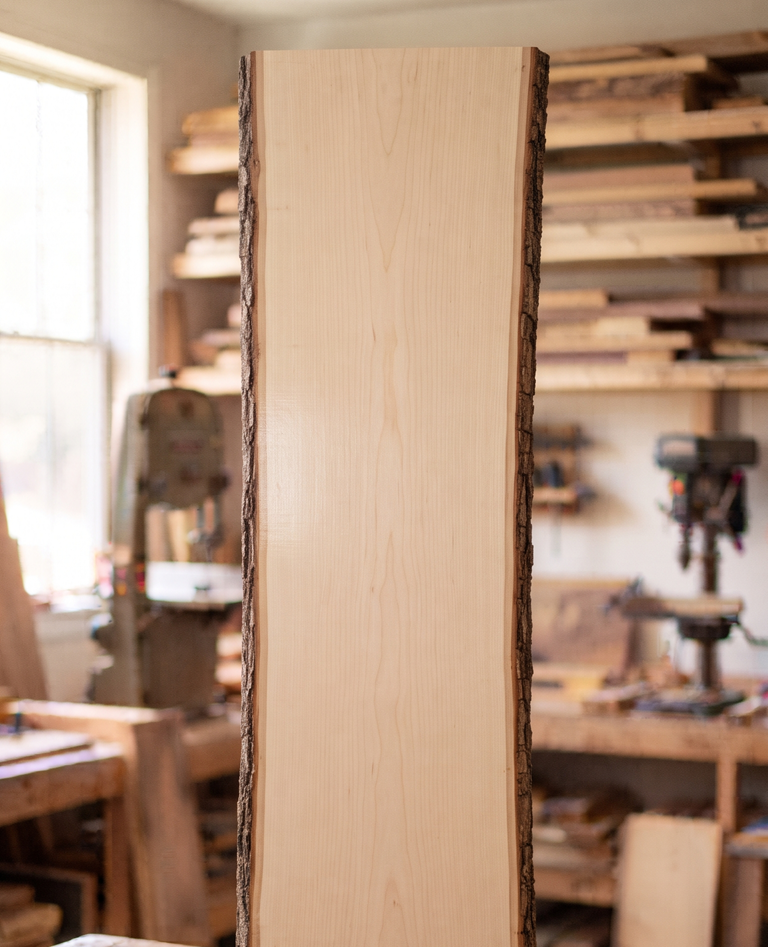
Basswood
Basswood
Origin: Eastern North America.
Color: Creamy white to pale pale brown or light creamy-tan, with little to no visible difference between sapwood and heartwood.
Janka Hardness: 410 lbf (Soft).
Furniture Performance: Exceptionally soft, lightweight, and even-textured. Because of its low hardness, it is not suitable for high-wear tabletops or structural frames, but it is unmatched for hand carving, intricate indoor moldings, and painted furniture components.
Common Uses: Woodcarving, intricate scrollwork, window blinds, piano parts, and toy making.
Fun Fact: Basswood is widely considered the absolute premier wood for professional woodcarvers because its lack of pronounced grain allows knives and chisels to slice through the material effortlessly in any direction without tearing.
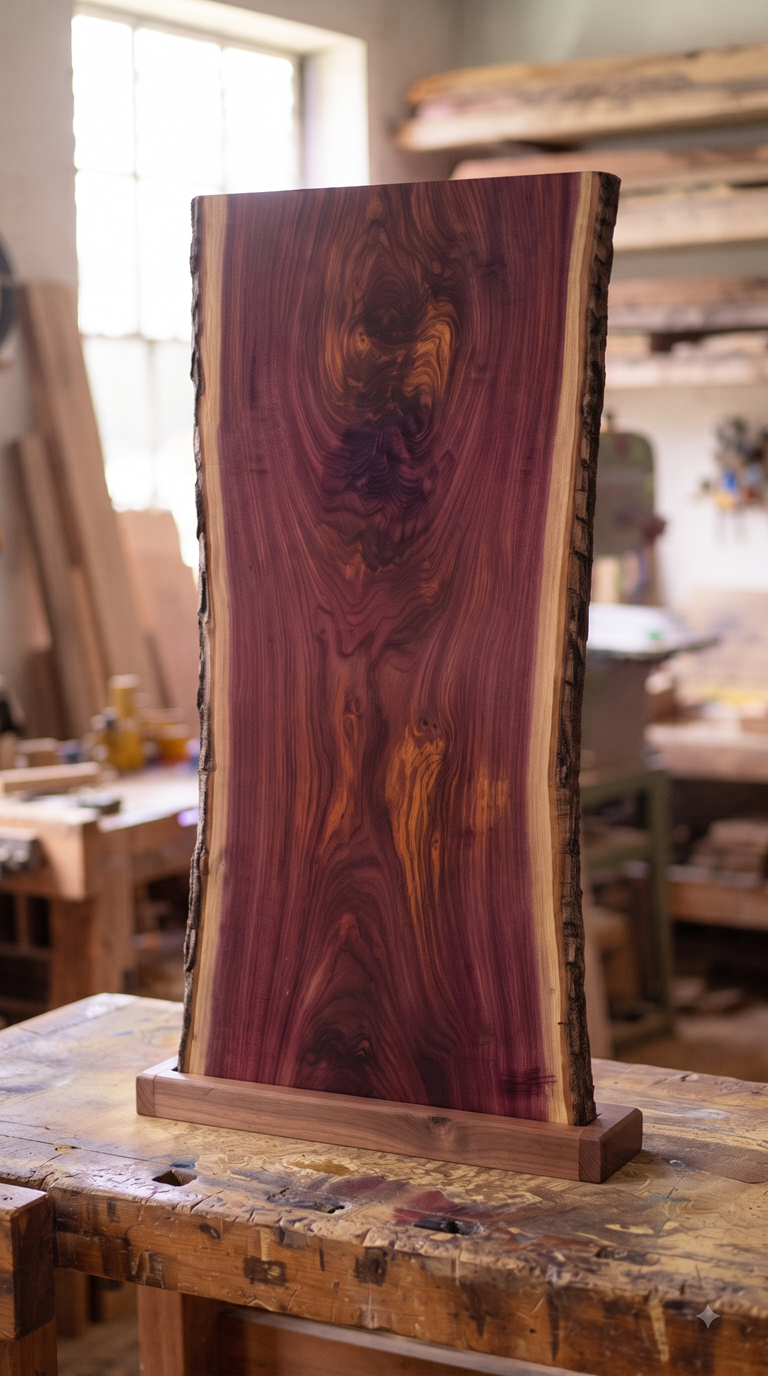
Caribbean rosewood
Caribbean rosewood
Origin: Central America, Southern Mexico, and the Caribbean.
Color: Multicolored palette ranging from golden-amber to deep reddish-brown, streaked with striking dark amber, black, and olive lines.
Janka Hardness: 2,290 lbf (Very Hard).
Furniture Performance: Exceptionally heavy, durable, and naturally oily. It withstands heavy physical wear, making it a robust option for high-use tabletops and custom counters.
Common Uses: High-end furniture, turned objects, knife handles, and architectural millwork.
Fun Fact: Locally known as Caribbean Rosewood, a single board of Chechen can transition across a wild and vivid spectrum of amber, red, and deep espresso tones.
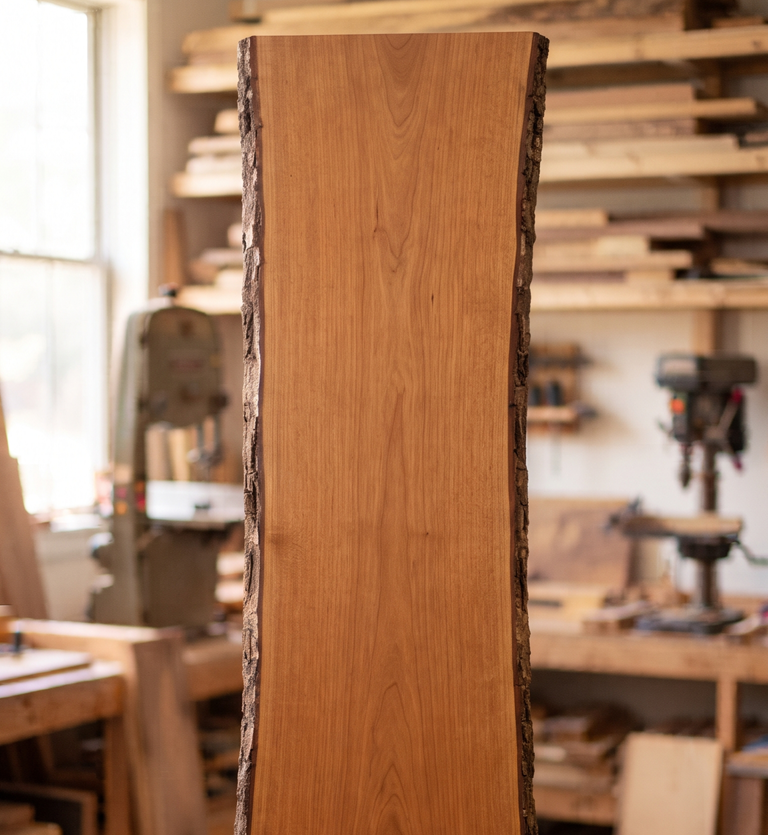
Cherry
Cherry
Origin: Eastern North America.
Color: Light pinkish-brown when freshly cut that deepens dramatically into a lustrous, warm reddish-brown patina over time.
Janka Hardness: 950 lbf (Moderate).
Furniture Performance: Excellent dimensional stability and very forgiving workability; it glues, stains, and carves smoothly, making it a favorite for traditional indoor furniture.
Common Uses: Fine cabinetry, shaker-style furniture, architectural millwork, and turned objects.
Fun Fact: Cherry is famous for its rapid photosensitivity; exposure to sunlight quickly accelerates its aging process, turning pale boards into a deep, rich red color within months.
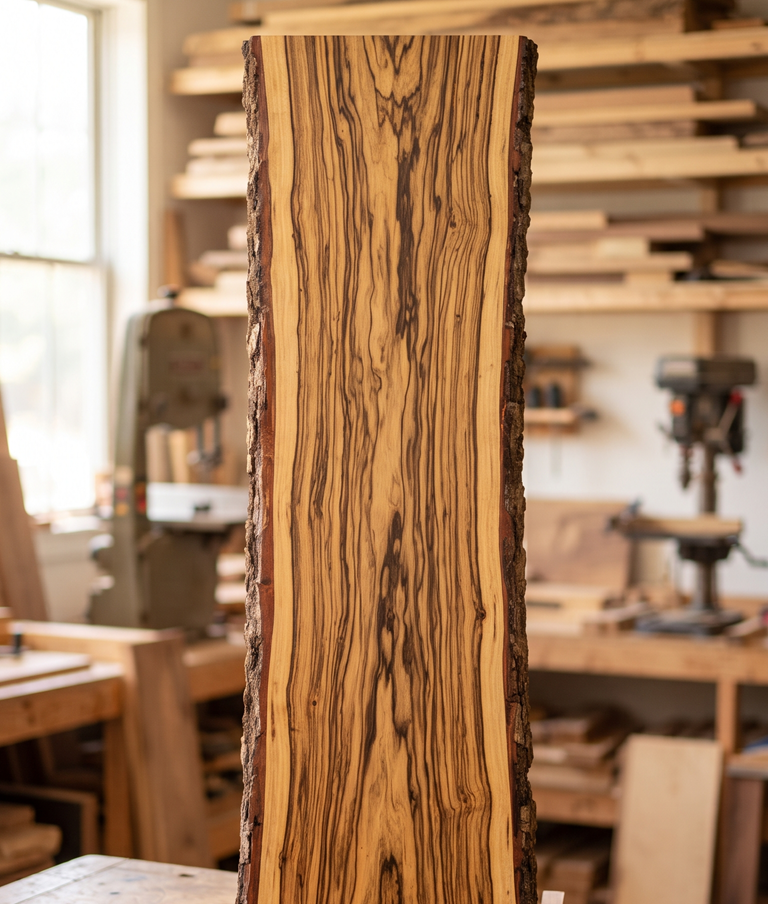
Zebrawood
Zebrawood
Origin: West Africa (primarily Gabon and Cameroon).
Color: Pale gold or creamy yellow background emphasized by prominent, high-contrast dark brown to black zebra-like stripes.
Janka Hardness: 1,575 lbf (Hard).
Furniture Performance: Moderately heavy and rigid. When utilized for flat table panels or accent borders, it provides strong structural integrity, though its wavy interlocked grain can occasionally tear out during aggressive planing.
Common Uses: Veneers, high-end accent pieces, guitar bodies, inlay work, and exclusive furniture.
Fun Fact: Its wild, graphic stripe pattern makes it a favorite choice for statement furniture where designers want the natural wood pattern to serve as the primary artistic focus.
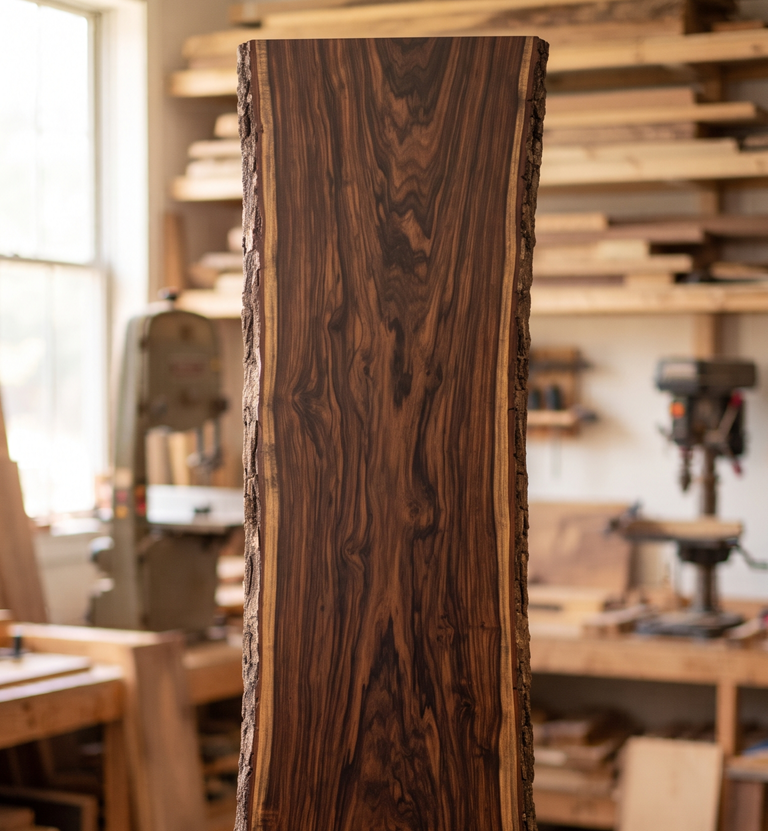
Indian Rosewood
Indian Rosewood
Origin: Indian subcontinent and Southeast Asia.
Color: Golden brown to rich dark chocolate brown with contrasting darker purple-black streaks.
Janka Hardness: 2,440 lbf (Very Hard).
Furniture Performance: Highly durable, rot-resistant, and stable once seasoned, turning and finishing smoothly for high-end statement furniture.
Common Uses: Carved furniture, musical instruments, flooring, and luxury cabinetry.
Fun Fact: Master artisans in South Asia have used its dense grain for centuries to hand-carve intricate folding screens and ornate palace furniture.
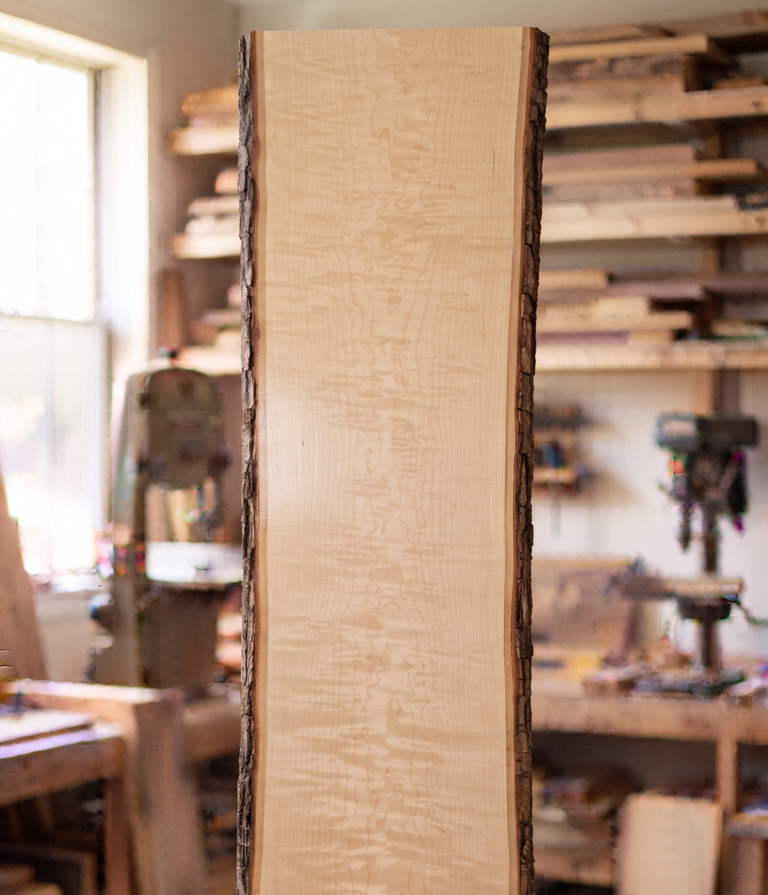
Birch
Birch
Origin: North America, Europe, and northern Asia.
Color: Light creamy yellow to pale white sapwood, paired with a light reddish-brown heartwood.
Janka Hardness: 1,260 lbf (Yellow Birch) (Hard).
Furniture Performance: High crushing strength and good stiffness with a fine, uniform texture. It machines reliably and holds screws tightly, acting as an exceptional utility wood for modern cabinetry and plywood cores.
Common Uses: Cabinetry, high-grade utility plywood, interior furniture, and doors.
Fun Fact: Birch bark is naturally waterproof and flexible, historically utilized by Indigenous peoples to construct lightweight, durable canoes and containers that could withstand harsh wilderness environments.
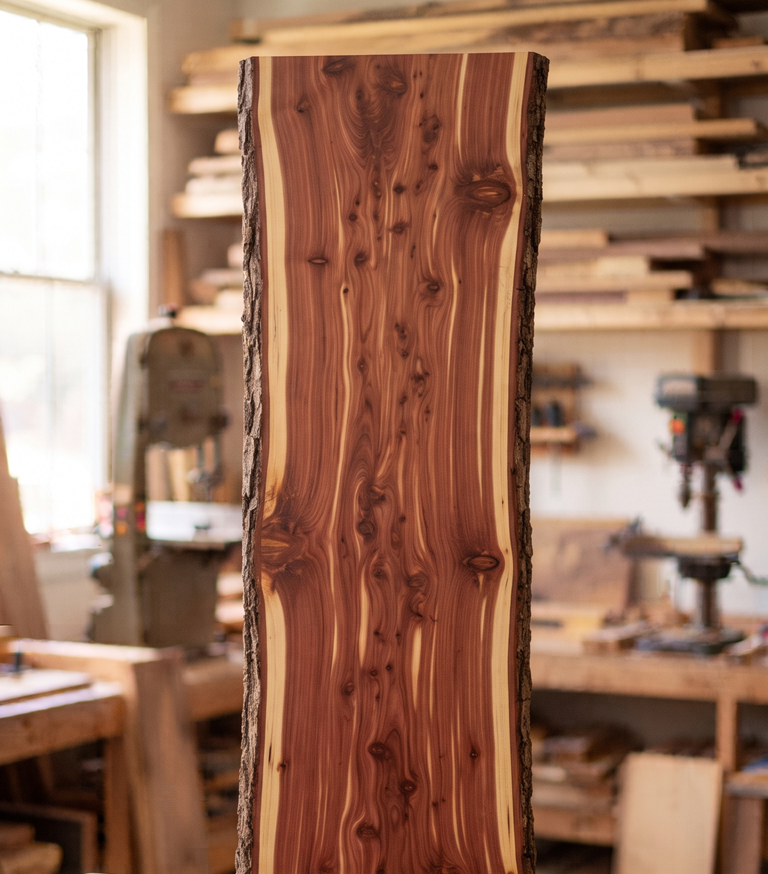
Red Aromatic Cedar
Red Cedar
Origin: North America (primarily the Pacific Northwest and Eastern regions depending on the specific species, such as Western Red Cedar or Eastern Red Cedar).
Color: Ranging from a pale straw or yellowish color to rich pinkish-red, amber, and deep reddish-brown heartwood.
Janka Hardness: 350 lbf to 900 lbf (Soft to Moderate, depending on the specific species).
Furniture Performance: Exceptionally lightweight and dimensionally stable with natural decay- and insect-resistant oils. Because of its softness, it is less suited for heavy-impact tabletops, but it excels in lining chests, outdoor patio pieces, and rustic indoor cabinetry.
Common Uses: Outdoor furniture, closet and chest linings, exterior siding, and rustic cabinetry.
Fun Fact: Red cedar contains natural aromatic extractives that give off a distinctive, pleasant scent and act as a natural, chemical-free deterrent against moths and other insects.
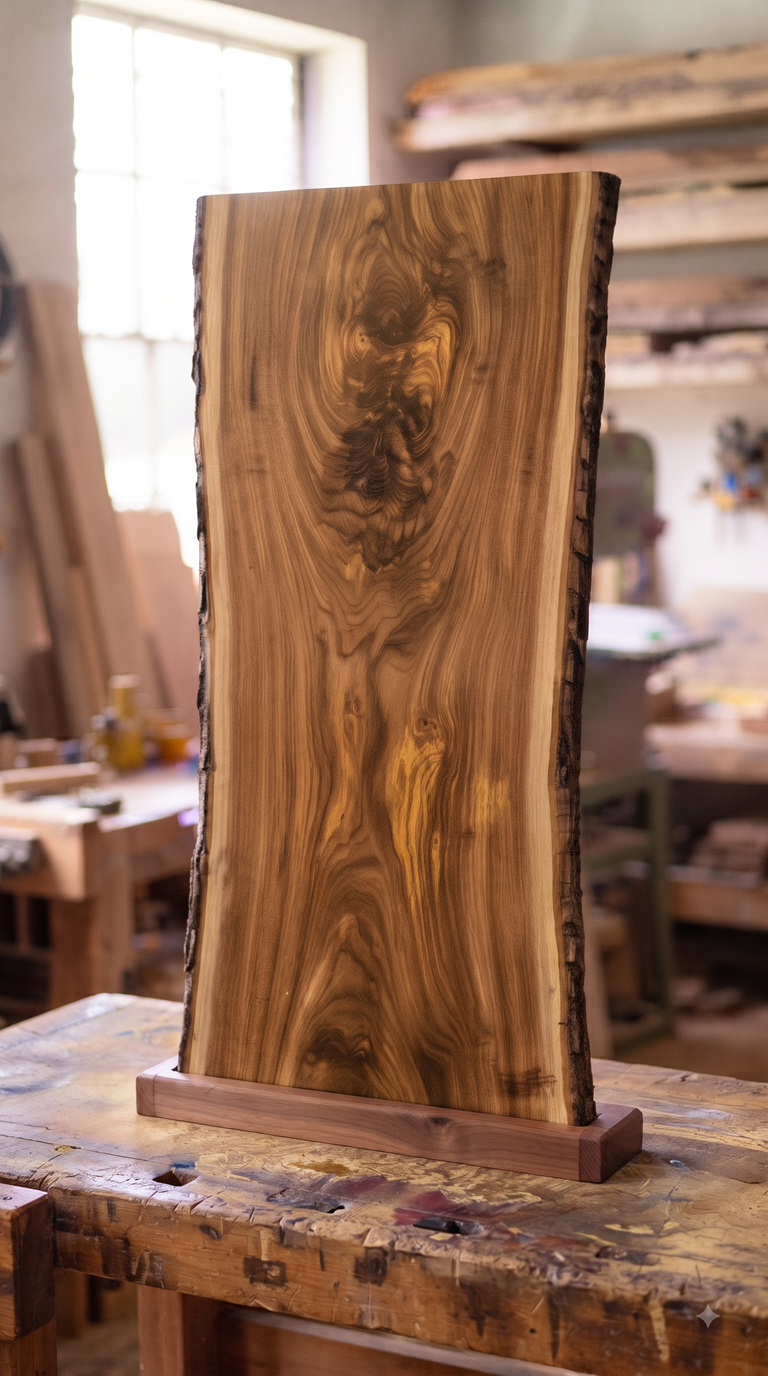
Elm
Elm
Origin: Northern temperate regions across North America, Europe, and Asia.
Color: Light greyish-brown to medium reddish-brown with a distinct, interlaced grain pattern.
Janka Hardness: 830 lbf to 860 lbf (Moderate).
Furniture Performance: Exceptional toughness with incredible resistance to splitting. Its interlocked grain makes it uniquely flexible for steam-bent chair components, though it requires care during planing to prevent tear-out.
Common Uses: Windsor chairs, rustic furniture, bentwood components, and specialized boxes.
Fun Fact: Elm wood was historically favored for underground water pipes and ship keels because it does not split easily and actually becomes tougher when kept permanently saturated in water.
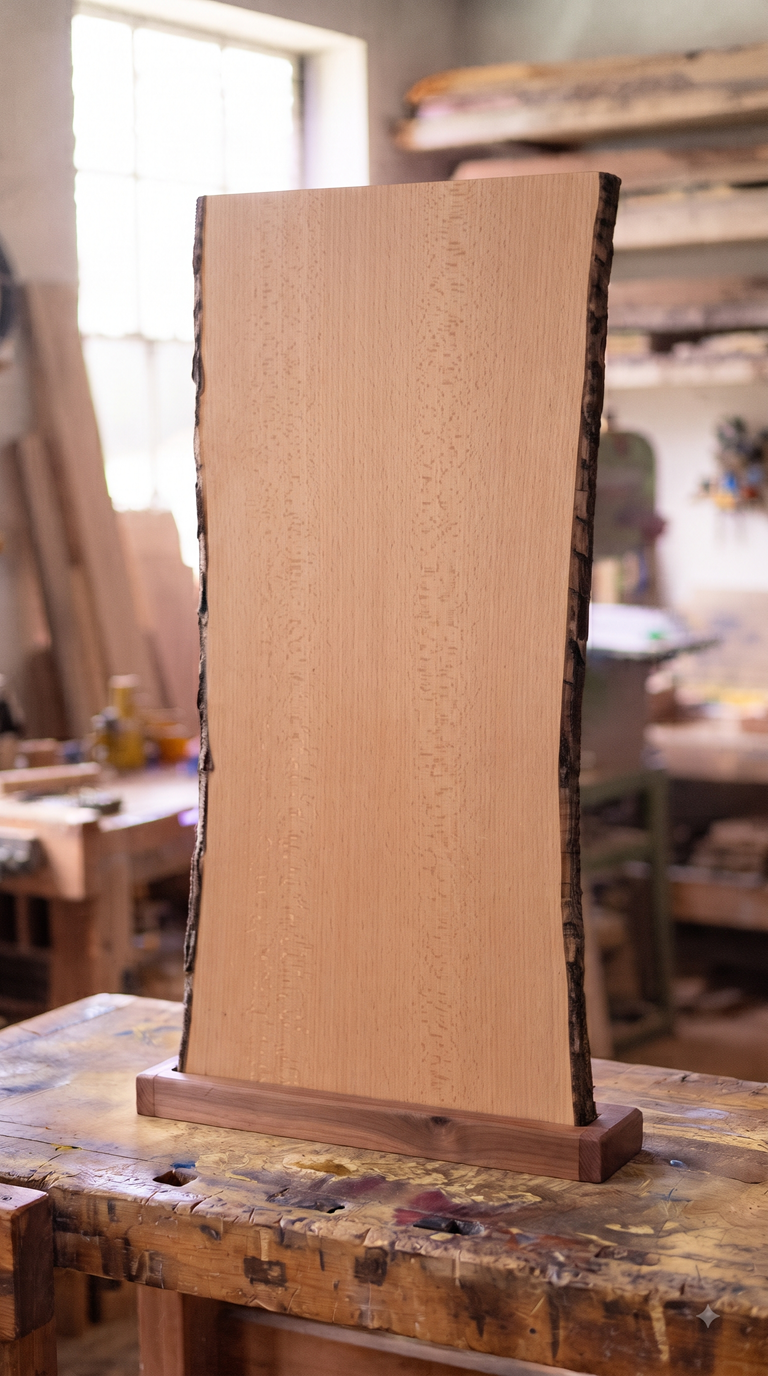
Beech
Beech Wood
Origin: Temperate regions of Europe, North America, and parts of Asia.
Color: Pale cream to a warm light pinkish-brown, darkening slightly to a deeper golden-brown tint with age and exposure to light.
Janka Hardness: 1,300 lbf (Hard).
Furniture Performance: Exceptionally heavy, strong, and stiff with high shock resistance. Its dense, tight grain makes it superb for steam-bending and sturdy chair frames, though it is prone to seasonal movement if not properly sealed.
Common Uses: Bentwood chairs, high-end furniture framing, tool handles, cutting boards, and interior flooring.
Fun Fact: Beech wood is one of the most reliable and popular timbers for steam-bending in the furniture industry, allowing makers to create sweeping, curved chair backs without cracking the wood fibers.